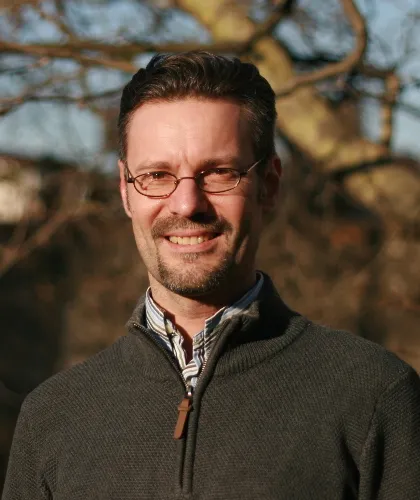
Alexandre Lewalle
Dr Alex Lewalle completed his PhD in physics at Cambridge, and subsequently directed his research toward the physics/biology interface. His general research interest is in the mechanisms of force generation in biological systems, from the molecular to the whole-organ scale. His earlier research, combining experimental and modelling approaches, has included measurements of the myosin motor protein that produces muscle contraction, and of red-blood-cell membrane deformation. He has also modelled the dynamics of actin filament growth, the mechanical driving force in cell motility. Since joining CEMRG, his research has focused on understanding, through modelling and computational simulations, the roles played by electrophysiological activity, sarcomere-level molecular interactions, and cardiac tissue structure in producing heart muscle contraction. By comparing theoretical biophysical models with clinical data, he investigates the biophysical mechanisms of cardiac function in healthy hearts and in heart failure.
Research themes
Papers
First author 10
Journal of Molecular and Cellular Cardiology, 2026
Developing cardiac biomechanical models beyond the clinic: modeling stressors of daily life
Biomechanics and Modeling in Mechanobiology, 2025
Cardiac length-dependent activation driven by force-dependent thick-filament dynamics
Biophysical Journal, 2024
Modeling mechanisms of the thick-filament off-state dynamics in cardiac muscle
Biophysical Journal, 2023
Functional and structural differences between skinned and intact muscle preparations
The Journal of General Physiology, 2021
Balance of Active, Passive, and Anatomical Cardiac Properties in Doxorubicin-Induced Heart Failure
Biophysical Journal, 2019
Decreasing Compensatory Ability of Concentric Ventricular Hypertrophy in Aortic-Banded Rat Hearts
Frontiers in Physiology, 2018
The FASEB Journal, 2017
The Journal of Physiology, 2014
Biophysical Journal, 2014
Middle author 7
Frontiers in Physics, 2023
Multi-omics HeCaToS dataset of repeated dose toxicity for cardiotoxic & hepatotoxic compounds
Scientific Data, 2022
Network integration and modelling of dynamic drug responses at multi-omics levels
Communications Biology, 2020
Philosophical Transactions of the Royal Society A Mathematical Physical and Engineering Sciences, 2020
Hypokalemia Promotes Arrhythmia by Distinct Mechanisms in Atrial and Ventricular Myocytes
Circulation Research, 2020
Biophysical Journal, 2020
The Journal of Physiology, 2014